

Can Warts and Skin Tags Come Back After Electrocautery? Causes and Prevention
Can Warts and Skin Tags Come Back After Electrocautery? Causes and Prevention
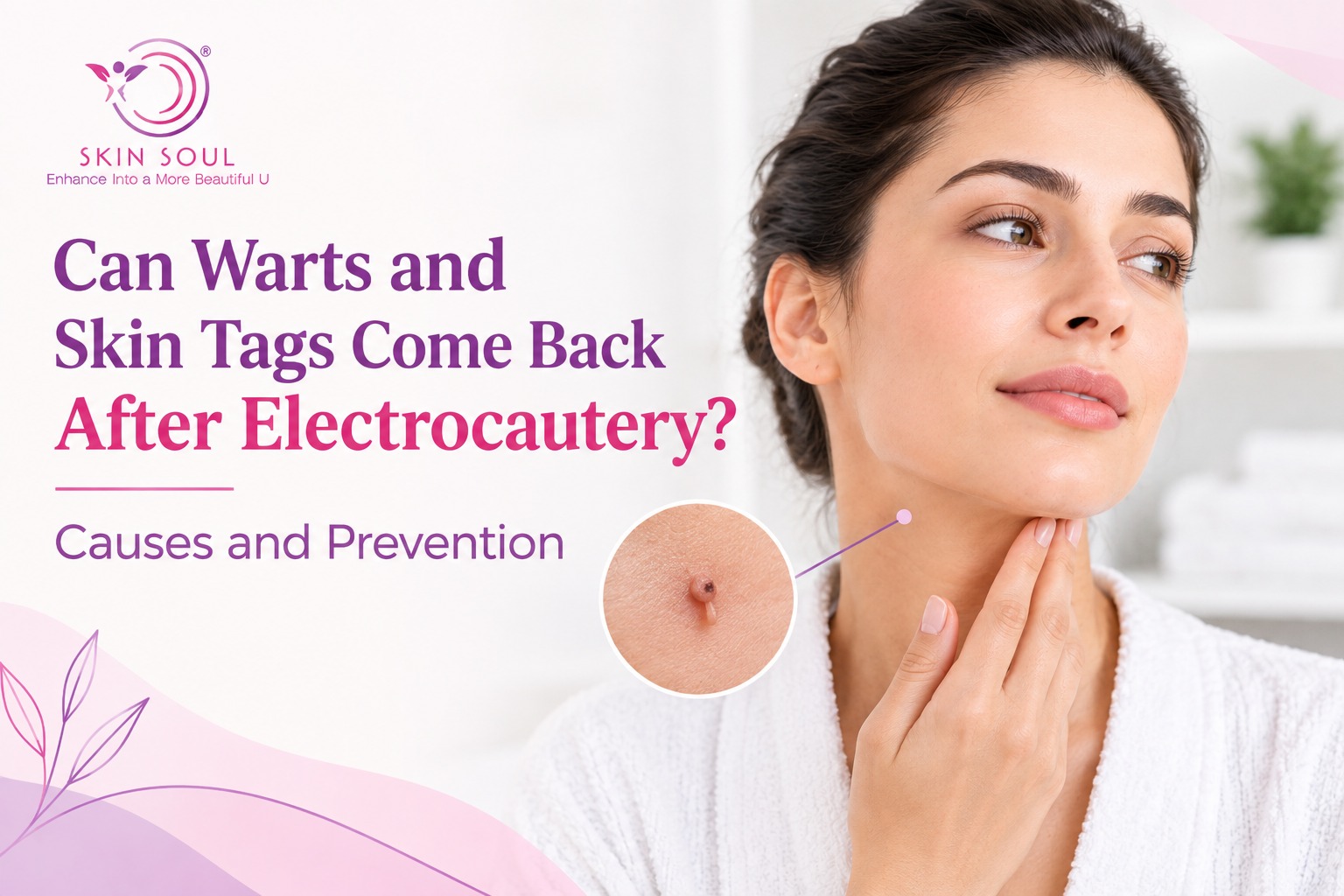
Warts and skin tags are common skin growths that can be bothersome because of their appearance, location, or repeated irritation. Electrocautery is one treatment option used by dermatologists to remove certain unwanted skin growths. While the treated growth is removed during the procedure, some people may wonder whether it can appear again later. Understanding why recurrence can happen and how proper skin care supports healing can help patients have realistic expectations.
At Skin Soul, Dr. Sneh Thadani, DNB Dermatology, evaluates the skin growth before recommending an appropriate treatment. The clinic provides Electrocautery Surgery in Navi Mumbai for selected skin concerns, with the treatment plan based on the type, size, location, and characteristics of the growth.
Can Warts or Skin Tags Return After Electrocautery?
The answer depends partly on what type of growth was treated. Electrocautery uses controlled heat to destroy or remove targeted tissue. When the affected growth is adequately treated, the same lesion may not necessarily return at that exact site. However, a new growth can develop nearby or elsewhere on the body.
Warts are associated with human papillomavirus (HPV), which can remain in surrounding skin even after a visible wart has been removed. As a result, another wart may develop later. Skin tags, on the other hand, are benign growths that commonly occur in areas where skin rubs against skin or clothing. Removing one skin tag does not prevent another from forming in the future.
This distinction is important when considering the results of an Electrocautery Surgery Procedure. Recurrence does not always mean that the original treatment was unsuccessful. It may represent a new lesion or a growth developing from an underlying tendency.
Why Can Warts Come Back?
Warts can sometimes recur because the virus responsible for them may remain in the skin. Individual immune responses also vary, which means some people may be more prone to developing recurring warts than others.
The location of the wart can also influence treatment considerations. Warts around the fingers, feet, or areas exposed to frequent friction may be repeatedly irritated. Picking or scratching the treated area may also contribute to spreading the virus to nearby skin.
For these reasons, an Electrocautery Surgery Procedure should be performed only after a dermatologist has assessed whether electrocautery is suitable for the particular wart.
Why Can Skin Tags Develop Again?
Skin tags are usually associated with friction and folds of skin. They are commonly seen around the neck, underarms, eyelids, groin, or other areas where repeated rubbing occurs. Factors such as body folds and individual skin characteristics can contribute to their development.
If one skin tag is removed, these underlying factors may still be present. Therefore, another skin tag may develop in the same general area even when the original lesion has been completely treated.
Patients considering Electrocautery Surgery in Navi Mumbai should therefore understand that treatment removes the targeted growth but does not necessarily eliminate every factor that may contribute to future skin growths.
What Happens During Electrocautery?
During an Electrocautery Surgery Procedure, the dermatologist uses a controlled electrical current to generate heat that treats the targeted tissue. The exact approach depends on the lesion being treated and its location.
Before treatment, Dr. Sneh Thadani can examine the growth and determine whether electrocautery is an appropriate option. A proper assessment is important because not every skin growth should automatically be treated as a wart or skin tag.
The treated area may appear red, slightly swollen, or develop a small crust during healing. Patients should follow the specific aftercare instructions provided by their dermatologist rather than picking or removing the healing crust prematurely.
When Should You See a Dermatologist Again?
A follow-up assessment may be useful if a treated area develops a new growth, continues changing, becomes painful, bleeds unexpectedly, or does not heal as anticipated. A growth that appears similar to a previous wart or skin tag should not automatically be assumed to be the same condition.
At Skin Soul, Dr. Sneh Thadani can assess recurring or newly developed skin growths and determine whether additional treatment is appropriate. Electrocautery Surgery in Navi Mumbai may be considered when the clinical assessment indicates that it is suitable.
Frequently Asked Questions
1. Can the same wart come back after electrocautery?
A wart may recur after removal because HPV can remain in surrounding skin. A dermatologist can assess whether a new growth represents recurrence or a separate lesion.
2. Can skin tags grow again after electrocautery?
The treated skin tag may be removed successfully, but another skin tag can develop later, particularly in areas exposed to friction or skin-to-skin contact.
3. Is electrocautery suitable for every wart or skin tag?
No. The suitability of electrocautery depends on the type, size, location, and characteristics of the growth. A dermatologist should evaluate it before treatment.
4. How should I care for the skin after electrocautery?
Follow the aftercare instructions provided by your dermatologist. Keep the area appropriately clean, avoid picking the treated site, and protect healing skin from unnecessary irritation.
Dr. Sneh Thadani
( Skin Soul Clinic, Nerul, Navi Mumbai. )
www.skinsoul.in
Recent Post



Skin Soul is a patient-centric Dermatologic Centre of Excellence that has been conceived and developed by Dr. Sneh Thadani. After completing her DNB in Dermatology and practicing for over nine years
- Home |
- About Us |
- Treatment |
- Contact Us |
- Sitemap

[ Scan QR Code ]
Copyright © 2023 Skin Soul. All rights reserved. Design By Endurance Tech.